
Is Turkey Safe for a Solo Female Traveller?
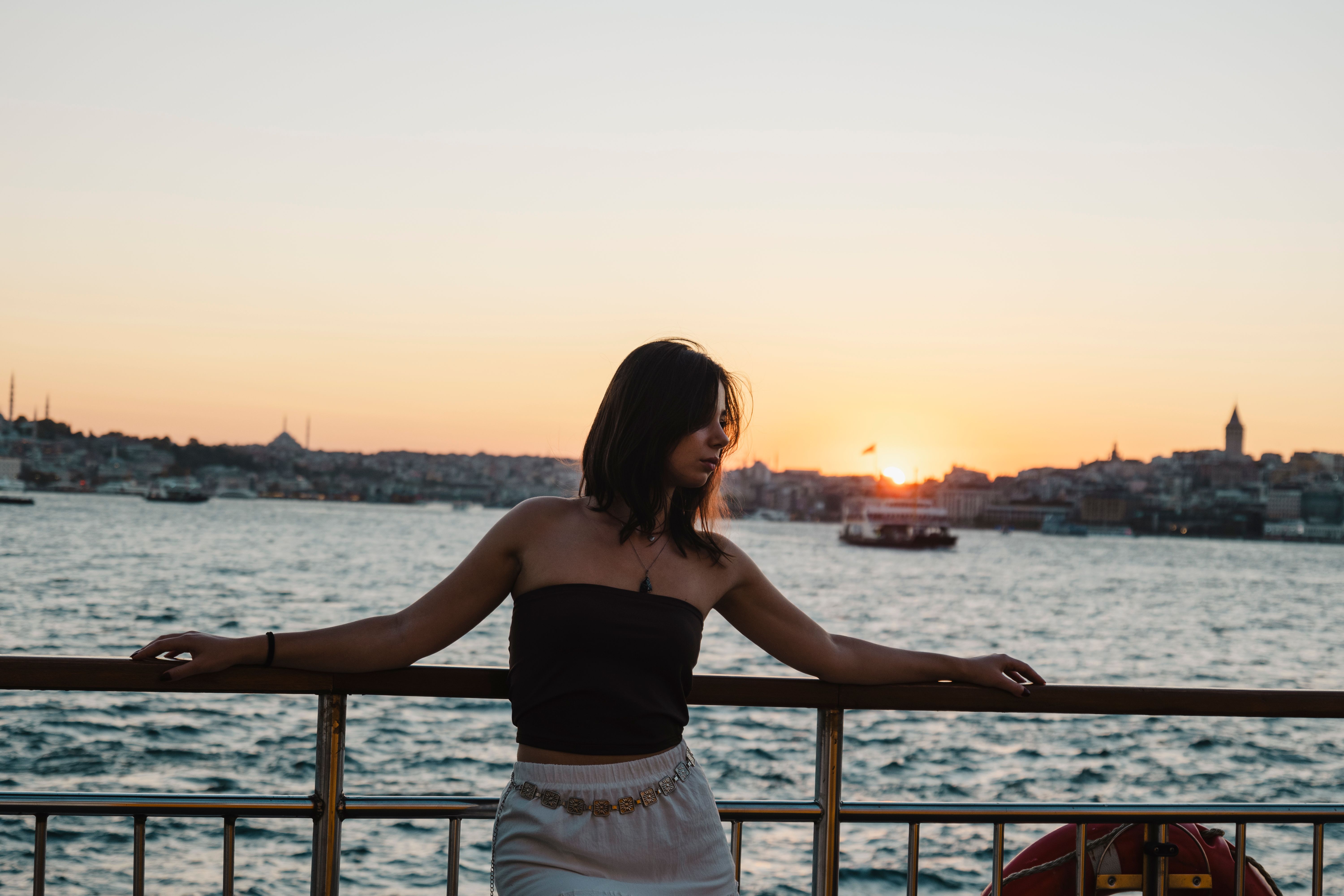
Located at the junction of Europe and Asia, divided by the Bosphorus Strait passing through Istanbul, Turkey occupies almost 780,000 sq km. The country currently boasts an estimated population of 86 million and has Turkish as the official language and Kurdish spoken widely in the southeastern region. Ankara is Turkey’s capital city but Istanbul is the largest one and the primary landing point for travellers to Turkey.
It is important for you to know that there are studies dedicated to the topic of travelling in Turkey as a solo woman that reveal very particular results and are worth reviewing prior to your trip. The study published in 2021 as a part of the Hidden Geographies collection (Kaba, B.) analysed 24 stories of solo women who had already been to Turkey. Prior to their visit, almost all of them expected to face various dangers in Turkey. After the trip, however, nearly all of them described Turkey as a safe, memorable, and highly recommended travel destination for other women to visit. This contradiction is the only important detail that should be known before your trip to Turkey.
Table of Contents
Is Turkey Safe for a Solo Female Traveller?
Crime statistics may differ greatly from one city to another and depend on such factors as time of the day and choice of actions you are going to take after arriving. According to the available crime statistics against visitors, Turkey has a lower crime rate compared to a number of countries in Western Europe. Such tourist areas as Sultanahmet and Bosphorus waterfront of Istanbul feature a considerable police presence that includes tourist zone policemen.
However, that doesn’t exclude the necessity to take care of your personal safety. Pickpocketing occurs in crowded bazaars and tramway. Unmetered taxis overcharge people outside of airports. Shop owners in the Grand Bazaar may follow you after establishing eye contact. These examples don’t include violent crime cases covered in the news, which is why they are important for you to understand while planning your trip.
The researcher from Alanya Alaaddin Keykubat University published in 2022 his study in the Journal of Mediterranean Tourism Research on what motivates women to travel alone in Turkey and what prevents them. According to the findings, constraints reported by women, including safety concerns, language barriers, family objections, etc., were directly reflected in the level of their satisfaction during the trip. Those women who managed to prepare for the obstacles in advance, taking into account these particular aspects, were more satisfied with their trips.
What the Research Actually Says
Tourism research on solo female travellers usually divides destinations into two categories: low-risk destinations and the destinations that have negative reputation, even though reality differs from expectations. Turkey belongs to the latter group. The research on solo female travel patterns compared Western travellers’ preferences and revealed that they tend to avoid Turkey, as well as the Middle East and some South American regions because of their assumptions concerning male dominance and violence. The researchers highlighted that these assumptions were mostly associated with the influence of media and cultural barriers rather than the actual risk that the visitors would face.
However, not every assumption is groundless. Several studies on women’s safety in public transport systems in different countries including Turkey show that night-time travel and unlicensed transports are the most dangerous categories, not the sightseeing in daytime and accommodation in hotels. Thus, you should consider these differences while planning your schedule.
Finally, you should be aware of the following pattern: several studies on Asian and Western solo female travellers indicate that the process of risk-taking itself is an important element of building independence during a trip abroad.
Getting Around Turkey as a Solo Female Traveller
Istanbul’s transport system operates with the help of Istanbul Kart, a rechargeable card valid in metro, tram, bus and ferry networks. Currently, the Istanbul metro network includes 260 km of metro routes divided among eleven lines, and Metro Istanbul (the public company operating the system) employs women not only in administrative positions but also in train driving and supervision of stations within the gender equality initiative. Metro cars and trams are air conditioned, well-lit and have security staff. It is usual for locals to offer their seats to pregnant women without being asked.
After the sunset, however, it is necessary to pay special attention to your safety. Long-distance coach buses are a usual form of transport used to get to Cappadocia and other tourist destinations from Istanbul and other major cities. It is recommended to book your seat in the front of the coach bus, close to the driver. The shared minibus system, dolmus, is quite widespread throughout Turkey and usually operates during the daytime. You should be aware of communication if you don’t speak Turkish, since destinations are announced verbally, not written.
In order to travel safely at night, it is necessary to use a licensed taxi application in Turkey rather than to stop any random car on the street. Prices are metered and easily traced, and it is much more useful at 11pm rather than 11am. A solo female traveller needs much more a five-minute ride booked via application than vigilance on the street at night in Istanbul or Izmir.
What to Wear and Cultural Context
Turkey is a secular state, and over 99% of the population identifies itself as Muslim. However, the practice of religion and the style of clothes differ greatly from one region to another and from one person to another. Istanbul, Izmir and Aegean coastal towns are characterised by a wide variety of visitors dressed in shorts, tank tops, and swimsuits on beaches and swimming pools without any problems. The headscarf is obligatory only in working mosques, where every visitor is supposed to have a scarf and to cover shoulders, and some major mosques have spare scarves for everyone right at the entrance.
In other areas of Turkey, wearing clothes that cover shoulders and knees may help to reduce the number of stares and unwanted attention that you may receive. There is no legal requirement to do so. This is just the awareness of local customs, the same adjustment that you would make when moving through a small Italian town, not through central Rome.
Direct eye contact with strangers, especially with men, on the street may be misinterpreted differently than at home. To know about it before your arrival beats finding it out during the first day of interaction.
Where to Go: Regions Worth Building a Trip Around
According to the official UNESCO World Heritage Centre, Turkey has 22 sites on its UNESCO list, which includes 20 cultural properties and 2 mixed cultural-and-natural sites. This means that your first visit to Turkey can be quite different depending on what you prefer.
Read more about what to see and do in Istanbul?
There are four UNESCO-listed zones in Istanbul: the archaeological zone of Sultanahmet (including Hagia Sophia and Topkapi Palace), the Suleymaniye conservation zone, the Zeyrek quarter, and the historical land walls. It would be reasonable to spend four days in Istanbul in order to see something apart from two or three main sights.
Cappadocia, located in central Anatolia, has its UNESCO-listed property: Goreme National Park and the rock churches of Cappadocia that became the first Turkish site included in the list in 1985. Volcanic landscape formed during centuries under the influence of erosion was transformed by Christians who started to carve churches into the rocks since the 4th century AD. Balloon flights over Cappadocia take place at sunrise every day of clear weather, and tickets sell out the day before.
Read more about what to see and do in Cappadocia?
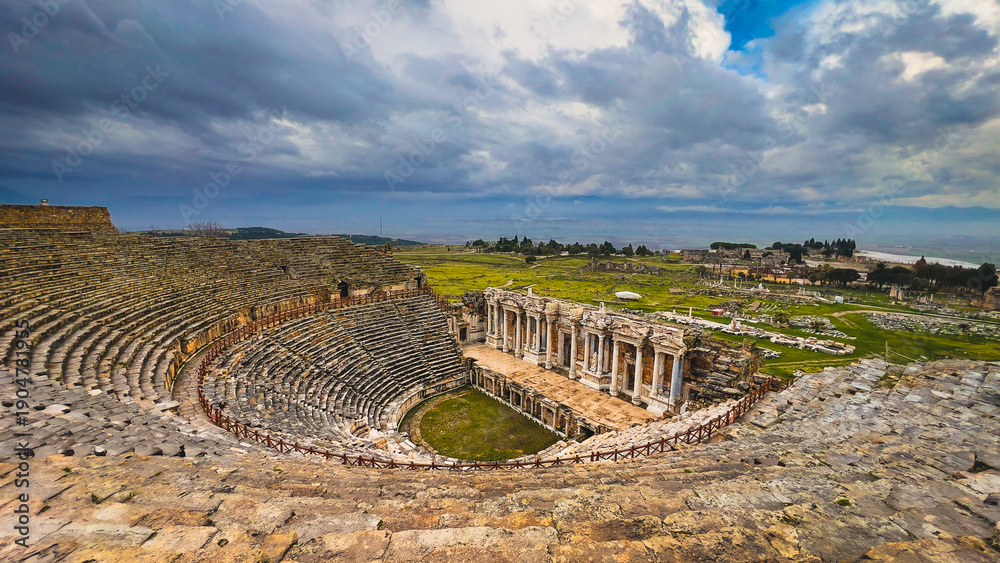
There are two major sights on the UNESCO World Heritage List of Turkey located on the Aegean coast: Ephesus, a Roman site located 80 km south of Izmir city, 20 km from Kusadasi and Ephesus, and Pamukkale with white mineral terraces. Both sights are popular among day visitors, and it would be better to come before 9am or after 4pm to avoid crowds. For a solo female traveller, all three regions are the most visited and the best-equipped in terms of infrastructure, which means that you would be able to find English signs and women-owned guesthouses there.
Read more about what to see and do in Izmir?
Money, Connectivity, and Practical Planning
Turkish Lira (TL) is the national currency in Turkey, and the exchange rate has changed considerably recently, so it would be wise to look for the latest information online rather than remembering a certain number. Credit cards are widely accepted in Turkey, including in the metro in Istanbul, but you should be ready for cash payments in rural areas and smaller vendors. Have small denominations of cash with you for markets and dolmus.
An eSIM makes your solo navigation easier and make sure you buy your package before your arrival to Turkey, better than using hotel wi-fi (which literally sucks) for downloading Google Translate Offline package and Google Maps. Both applications work well in Turkey, and having them before your arrival saves you one layer of stress on the first day.
The prices for museums and sights, as well as for Hagia Sophia, Topkapi Palace, and other popular sights, usually change periodically. Verify the latest information about opening times and prices for entry in advance of your visit.
Book your female tour guide to help you with everything you need!
Where to Sleep and Who to Book Through
Your accommodation is crucial for your trip in Turkey. It would be reasonable to stay in hotel, hostel, or motel in a central and well-reviewed area, such as Sultanahmet or Beyoglu in Istanbul, Selcuk town centre near Ephesus, Kusadasi, and central Goreme in Cappadocia, rather than seeking for the cheapest accommodation possible. Accommodation that costs considerably lower than everything around has poor illumination, little traffic in the area after dark, and a lack of other visitors, which cannot be seen from the pictures. Read the latest twenty reviews rather than checking the rating average and look for comments related to the walk from transport station.
The same concerns tour operators and transport providers: it would be reasonable to use only established and reviewed agencies for booking rather than private offers. Licensed tours through Viator are available for Ephesus, Cappadocia hot air balloon flight, and Istanbul Sultanahmet area with English-speaking guides and small groups, and this booking creates a trace for you: you know the pickup time, the name of your operator, and your company on the day of your visit.
There are a few rules that don’t depend on the destination.
- Don’t use hitchhiking; intercity bus network is inexpensive and frequent enough to make it unnecessary.
- Don’t walk in empty and poorly illuminated streets after dark, even if you think that these streets look familiar during the daytime; walk a few extra minutes to the well-illuminated streets or take a taxi.
- Also, treat the person you met on a dating app as a stranger until the contrary is proved; have your first meeting in a busy public place and tell a friend where you are going and when you are going to call him or her back. Avoid giving away your address and having your pickup late at night.
All these rules aren’t based on the fact that this country is particularly dangerous. According to the crime statistics, the crime rate against tourists in Turkey is lower than in several countries of Western Europe that I mentioned in my guide already. The low crime rate doesn’t mean the zero crime rate, and the rules mentioned above should be followed by any solo female traveller in Rome, Barcelona, or any other major tourist city.
Ready to Plan Your Trip to Turkey?
Turkey requires preparations more than cautions. Read the section on transportation carefully prior to booking, pack for the evenings in Istanbul and warm afternoons in the Aegean coast, and leave at least one additional day for each region for sites that usually require more time than you see on a map. The difference between your expectations and reality regarding Turkey turns out to be, according to the researches mentioned here, consistently positive for this country, provided that you book reasonably and stay in central areas.
Frequently Asked Questions
Is Istanbul safe for solo female travellers?
Yes, Istanbul is widely recognised as a safe place for solo female travellers, particularly in well-known districts such as Sultanahmet, Karakoy, Galata, Besiktas and parts of Kadikoy. Istanbul attracts millions of visitors every year and provides a visible police presence in major tourist areas.
The risks that solo female visitors in Turkey are likely to face are the same as in most big European cities: pickpocketing in crowded places, taxi overcharging, and persistent approach of shop owners near popular sights. Violent crimes against foreign visitors are rare in Istanbul.
These precautions are the same as in Rome, Barcelona, or Paris: avoid isolated streets after dark, use licensed taxis or ride-hailing apps for your night rides, and stay in well-developed tourist neighborhoods with public transportation and pedestrian traffic.
Can women wear shorts in Turkey?
Yes, women are regularly seen wearing shorts, dresses, sleeveless shirts, and swimwear in Istanbul, Izmir, Antalya, Bodrum, and coastal resorts of Turkey without receiving any negative reactions.
Dress code becomes more conservative in smaller towns and eastern and central Anatolia, where clothes covering shoulders and knees receive less attention from the locals. This is a question of social norms rather than laws.
The exception is visits to mosques: every visitor has to cover shoulders, legs, and head inside the active mosque, regardless of nationality or religious beliefs. Some major mosques provide scarfs and wraps for visitors in need.
Is Cappadocia safe for women travelling alone?
Cappadocia is one of the safest destinations in Turkey for solo female visitors and is widely recommended by solo female travellers. Goreme and Uchisar are the well-developed tourist towns where you can easily find English-speaking staff and guided tours organised for solo female visitors.
You are most likely to spend your days in small groups hiking, visiting underground cities, or flying in hot air balloons in this region. It is easy for solo female visitors to find new travel partners in such groups.
Just as in other regions of Turkey, you should take precautions: use licensed companies for organizing hot air balloons or tours, don’t travel alone after dark, and book the way back to your accommodation in advance if you decide to explore remote valleys.
For many first-time visitors, Cappadocia is one of the easiest regions in Turkey to travel as a solo female.
Sources
- Kaba, B. (2021). Foreign solo female travellers’ perceptions of risk and safety in Turkey. In Hidden Geographies(pp. 475–493). Springer International Publishing.
- Tükenmez, E. G. (2022). Travel motivations and constraints of solo women travelers in Turkey. Journal of Mediterranean Tourism Research, 2(1), 25–44. https://doi.org/10.5038/2770-7555.2.1.1012
- Yang, E. C. L., Khoo-Lattimore, C., & Arcodia, C. (2018). Constructing space and self through risk taking: A case of Asian solo female travelers. Journal of Travel Research, 57(2), 260–272.
- UNESCO World Heritage Centre. Türkiye, World Heritage Convention. https://whc.unesco.org/en/statesparties/tr
- Metro İstanbul (public transit operator). Rules of Travel. https://www.metro.istanbul/en/content/rules-of-travel
Join My Tours




Travel Guide: The Best Booking Resources
Below are my favorite companies to use when I travel. They are always my starting point when I need to book a flight, hotel, tour, car rental, or travel insurance.
- Booking.com – A reliable all-around booking site with a wide selection of hotels, guesthouses, and budget accommodation.
- Expedia – A useful platform for comparing hotels, flights, packages, and travel deals.
- Viator & Tripadvisor – Great for finding tours, activities, day trips, and local experiences.
- GetYourGuide – A large marketplace for tours, excursions, guided walks, food experiences, and activities.
- Airbnb – A good option for apartments, unique stays, and longer-term accommodation.
- Skyscanner – My favorite flight search engine. It searches budget airlines and smaller sites that larger platforms often miss.
- SafetyWing – Affordable travel medical insurance for digital nomads, long-term travelers, and people on the road.
- Discover Cars – A car rental comparison site that helps you find rental deals for road trips and airport pickups.