
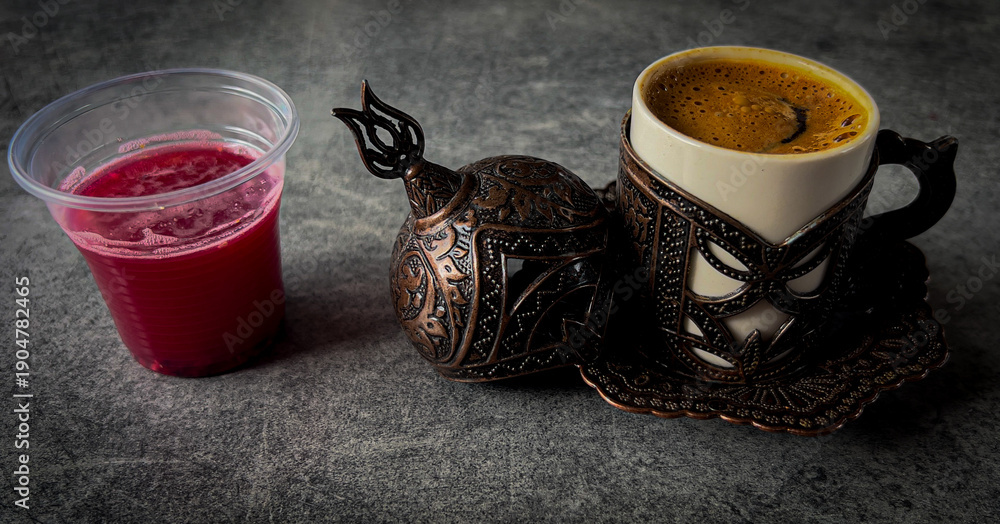
Turkish Coffee: A Fascinating History, Culture, How to Drink It
The preparation the coffee process is unique: very finely ground coffee, cold water, possible addition of sugar and cezve are heated up together until the foam appears. Turkish coffee is unfiltered, so all coffee grounds settle at the bottom.
This guide about Turkish coffee is going to cover the history and cultural significance of the drink, what UNESCO recognizes in regard to Turkish coffee, how to prepare and order it, how to drink Turkish coffee properly, fortune telling, marriage traditions and coffeehouses, as well as where to find it in Istanbul and where to buy Turkish coffee.
What is Turkish coffee?
Turkish coffee is coffee brewed from very finely ground coffee beans with water, usually in a cezve. Optionally, sugar can be added during preparation of the coffee. It is served unfiltered in a small fincan, so some grounds remain at the bottom. Turkish coffee name denotes both preparation and serving process.
Why is Turkish coffee different from regular coffee?
Grinding process is much finer, coffee is prepared without filtration, it is brewed directly with cold water in a cezve. It is served in a small cup with foam and sediment. Turkish coffee is different from espresso, because it is not extracted under pressure, and differs from filter coffee, because grounds remain in the cup.
What Is a Cezve?
Cezve is a special pot which is used to prepare Turkish coffee. It is made of copper and brass, and stainless steel and other materials are also used.
How do you order Turkish coffee in Turkey?
Say “Bir Turk kahvesi, lutfen”, then say what kind of sugar you prefer: sade for no sugar, az sekerli for a little sugar, orta for medium sugar or sekerli for sweet. Sugar is added to the coffee during preparation, so you have to specify it while ordering.
What does ”sade” mean in Turkish coffee?
Sade means without sugar. If you order Turkish coffee “sade”, no sugar is added during preparation. Ask for az sekerli if you want only a little sweetness and ”sekerli” for coffee with sugar.
Why is Turkish coffee served with water?
There is water typically served along with Turkish coffee and UNESCO includes it in its description of the tradition. Turkish coffee UNESCO states that water helps to refresh the mouth before tasting the coffee. (UNESCO Intangible Cultural Heritage) Kurukahveci Mehmet Efendi also explains water service in the same terms. (Kurukahveci Mehmet Efendi)
Can you drink the grounds in Turkish coffee?
You shouldn’t drink the grounds intentionally. They settle in the bottom and become thicker while drinking the coffee. Stop drinking when you get to the sediment rather than drink all of it. The grounds remaining at the bottom are used for coffee fortune telling.
Is Turkish coffee UNESCO heritage?
Yes. Turkish coffee culture and tradition were inscribed on UNESCO’s Representative List of the Intangible Cultural Heritage of Humanity in 2013. The recognition means that UNESCO recognized preparation techniques and other social practices, such as hospitality, coffeehouse culture, social events and intergenerational transfer of knowledge. (UNESCO Intangible Cultural Heritage)
Table of Contents
What Is Turkish Coffee?
Unlike other drinks, Turkish coffee is neither the name of a coffee growing region nor a special kind of coffee. Coffee is very finely ground and brewed in a small pot (cezve) using cold water. Optionally, sugar can be added during preparation.
Being unfiltered, this coffee contains coffee grounds in the cup. It is concentrated and aromatic, with denser texture than filter coffee. Turkish coffee’s also different from espresso: the former is prepared directly using cold water and not extracted under pressure.
Turkish coffee beans can be produced in any region. The characteristic feature of Turkish coffee is the grind, preparation method, serving manner and cultural tradition around it.
A Short History of Turkish Coffee
The presence of coffee in the Ottoman Empire dates to the 16th century and there’s evidence that the first consumption of coffee took place in Istanbul in the middle of this century. Coffeehouses appeared as a place for sociability, conversations and information exchange.
It’s difficult to give the exact date when coffee was brought to Istanbul. The traditional story says that coffee was delivered to Istanbul and brought to the palace of Sultan Suleiman by Ozdemir Pasha, an Ottoman governor of Yemen. However, the exactness of this story is questionable as different dates and descriptions exist for the first arrival of coffee in Istanbul.
By the end of the 16th century, the coffee trade developed in Istanbul. According to Marmara University, the first Istanbul tahmishane (roasting and grinding facilities) was opened in Tahtakale in the 1590s.
The legend of the Ottomans having left their coffee sacks after the siege of Vienna, creating coffeehouses in Vienna isn’t based on very reliable sources either.
Why Is Turkish Coffee So Important in Turkish Culture?
The Turkish coffee culture’s as much about the ritual of coffee drinking as about the drink itself. To offer coffee to a guest is a sign of hospitality; coffee accompanies visits, conversations with friends and relatives, celebrations and other occasions.
Turkish coffee’s always an opportunity to sit rather than a drink to take away. Sometimes a host takes some time to prepare it before emptying the cup.
Coffee’s also traditionally served during the engagement ceremony and during holidays. The knowledge and rituals about coffee are traditionally transferred in the families.
Turkish proverb about coffee drinking and forty years’ memory is just another metaphorical way of speaking about friendship.
Is Turkish Coffee UNESCO Intangible Cultural Heritage?
Yes. Turkish coffee culture and tradition was included to UNESCO’s Representative List of the Intangible Cultural Heritage of Humanity in 2013.
UNESCO doesn’t recognize Turkish coffee as the oldest and the best coffee in the world. The inclusion to the list means that UNESCO recognized a living cultural tradition combining preparation and brewing techniques, hospitality, social interaction and intergenerational transfer of knowledge.
UNESCO’s description states the use of very finely ground roasted beans, brewing slowly using water and sugar, small cups, accompanying water, coffeehouses, conversations and fortune telling using the coffee grounds.
How to Prepare Turkish Coffee?
To prepare a traditional Turkish coffee you need some basic ingredients: very finely ground coffee, cold water, a pot(cezve) and optional sugar.
For one serving, use one coffee cup of water and about 6 grams of coffee as a practical guideline. Recipes in households vary greatly, so this proportion is only a guideline.
Put water, coffee and optional sugar to the cezve and stir the mixture when it is still cold. Heat it slowly until the foam appears.
Don’t heat the coffee strongly for too long. Take the coffee off the fire when foam starts to rise and pour it into the coffee cup(fincan). The exact timing depends on each household and coffee shop.
Turkish Coffee on Sand
Turkish coffee on sand is a traditional preparation where the coffee pot is heated slowly in hot sand, creating a rich, aromatic brew. The gentle heat allows the coffee to warm gradually rather than boiling aggressively. Slower it’s cooked tastier it gets.
You’ll often see this method in Turkish coffee houses, traditional markets, and cultural demonstrations. Watching the coffee rise in the pot while the sand shifts around it is part of the experience, not just a way of making the drink.
How to Drink Turkish Coffee?
Turkish coffee’s served in a fincan, usually accompanied by water and sometimes Turkish delight. Coffee grounds are expected to be in the cup.
Wait until the coffee gets cooled enough to be drunk comfortably and drink it slowly. It isn’t necessary to stir the coffee. While drinking Turkish coffee, you’ll notice that it becomes thick due to sediment in the bottom.
Don’t try to drink the grounds. Stop drinking when you get to the heavy sediment at the bottom.
Why Is Water Served With Turkish Coffee?
Water’s typically served along with the coffee. You can drink some before the coffee to refresh your mouth, drink Turkish coffee and then some more water after drinking coffee.
The practical reason for this tradition’s that water refreshes your mouth and prepares you for drinking Turkish coffee. Water isn’t supposed to be poured into the coffee.
What Is Turkish Coffee Fortune Telling?
After drinking Turkish coffee, the grounds can be used for the fortune telling. The empty cup is typically turned upside down onto the saucer.
Fortune teller interprets symbols formed by the dried grounds. Academic research says that it is a social ritual of storytelling.
For travelers, the fortune telling’s better to understand as entertaining and cultural storytelling rather than a scientifically proven way to predict the future.
Turkish Coffee and Marriage Traditions
Coffee’s served traditionally during the wedding-related ceremonies such as the visits to the family for marriage proposal. Salt-in-the-groom’s-coffee is one of those customs.
There are different variants of the custom where the bride-to-be puts salt instead of sugar in her future husband’s coffee.
Turkish Coffeehouses
Turkish coffeehouses(kahvehane) originated in Istanbul in the middle of the 16th century and was an important place for men’s sociability, conversations and information exchange. Historical studies also describe coffeehouses as the places for games, storytelling and business activity.
Modern kahvehane isn’t identical to the original Ottoman coffeehouses. They’re still informal places for conversation and social interaction, playing games, watching TV and drinking tea and coffee.
Where to Drink Turkish Coffee in Istanbul?
Tahmis Street and the nearby market area are still associated with Istanbul coffee trade, so visiting these places and the coffeehouse will be a natural combination with visiting Spice Market or Grand Bazaar.
On the Asian side, Fazil Bey’s Turkish Coffee in Kadikoy is a good choice.
In Balat, Cumbali Kahve is an option for a modern coffee cafe.
Near Beyazit, Corlulu Ali Pasa Medresesi will provide a traditional coffeehouse atmosphere.
It isn’t necessary to visit a famous place to have an experience of traditional Turkish coffee. A visit to a neighborhood coffeehouse will give a good idea of the tradition.
Where to Buy Turkish Coffee in Istanbul
The center of Kurukahveci Mehmet Efendi is located at Tahmis Sokagi 66 in Eminonu – a very logical place to visit in regard to the coffee trade of Istanbul.
You can buy ready ground coffee for cezve or Turkish coffee machine. The company also currently sells sets of ground coffee, a copper cezve and two Turkish coffee cups of 80 cc capacity.
Buy a quantity that you will consume within this period of time and store the package away from heat, light and moisture. Tahtakale is also a good place to compare cezves and fincan sets.
What Is a Cezve?
Cezve is a special pot which is used to prepare Turkish coffee. It is made of copper and brass, and stainless steel and other materials are also used. Its shape allows to contain foam while heating and helps to pour Turkish coffee. It is better to choose one or two-serving cezve to start.
Cezve is pronounced roughly “Jez-veh”. You will hear it frequently while visiting shops selling coffee equipment in Istanbul.
Turkish Coffee Cups and Serving Style
The traditional cup is called fincan. It is a small cup, typically served on a saucer. It is supposed to contain a concentrated serving of Turkish coffee. Foam is expected, as well as water and Turkish delight.
A Good Turkish Coffee Experience in Istanbul
Combine the coffee experience with walking day. Your route through Spice Market, Eminonu, Tahtakale and Grand Bazaar may contain a natural stop at coffeehouse.
Local guide can explain you how to order Turkish coffee, the importance of foam and other interesting facts. If you plan to go for an Istanbul food tour, Turkish tea, lokum, baklava or Grand Bazaar visit may also be naturally combined with this day.