Ephesus Complete Guide: History, Tips and How to Visit
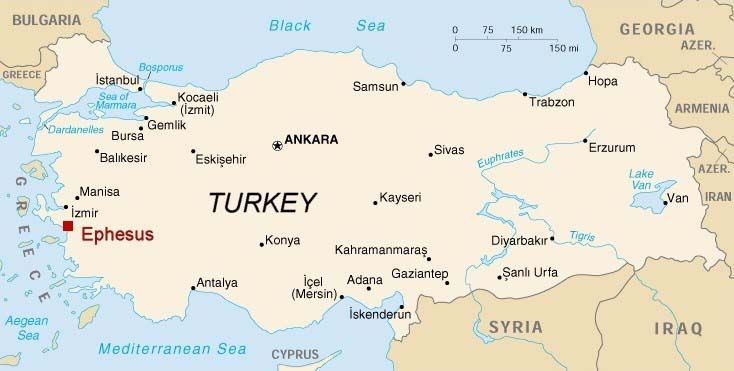
Ephesus is near modern Selcuk, in Izmir province on the Aegean coast of Turkey. About 3 km from Selcuk town centre, around 80 km south of Izmir, and roughly 20 km from Kusadasi by road.
Table of Contents
History of Ephesus
What Was Ephesus Before the Famous Ruins?
The story of Ephesus starts much earlier than most people expect. Before the Library of Celsus, before the Roman columns, before the Greeks — there were already people living and trading in this region. Archaeological research places the earliest human traces at Cukurici Hoyuk, about one kilometre southeast of the later Hellenistic and Roman city. OeAW research dates activity there to the Neolithic period, the seventh millennium BC, when settled life was spreading through Anatolia.
That detail changes how you should think about the whole site. Ephesus wasn’t a Greek city planted on an empty stretch of coast. The area already had thousands of years of settlement behind it. Cukurici Hoyuk grew into a trading hub connecting the Aegean with Central Anatolia, with raw materials moving across serious distances. There was already a world here.
In the second millennium BC, the region was probably connected with the Hittite-named city Apasa — a name scholars often bring up when tracing the deep background of Ephesus. From around 1000 BC, Greek-speaking groups started arriving in western Anatolia. Finds under the later commercial agora and on Panayirdag are linked to Greek presence, though exactly how early settlement looked here is still being debated.
Why Did the Temple of Artemis Matter So Much?
Here’s what happens almost every time I take a group to the Temple of Artemis. They arrive expecting something grand. They find one re-erected column standing in a soggy field near Selcuk, often with a stork nesting on top. And they’re disappointed.

That disappointment is understandable, but it comes from the wrong expectation. The Artemision was never important because of how it looks today. It was important because of what it did for the city while it was standing and functioning.
OeAW research places a sanctuary of Ephesian Artemis here by at least the seventh century BC. A major sixth-century building followed, associated with the Lydian king Kroisos. After the fire of 356 BC, the Ephesians rebuilt on a monumental scale. Ancient authors eventually listed it among the Seven Wonders of the Ancient World — and they weren’t wrong to.
In the Roman period, the Artemision wasn’t just a temple. It was the centre of a large sacred district with its own buildings, administration, jurisdiction, land holdings, archives, and genuine economic power. Inscriptions show the sanctuary owned resources in the Kaystros valley — agricultural land, probably marble quarries, probably salt flats. It was also used as a secure place for deposits and records, the way people might use a bank today.
Think about what that means. Artemis wasn’t only religion. She was identity, law, finance, land, memory, and civic reputation. The sanctuary was what gave Ephesus its standing in the Mediterranean world.
The surviving column can’t show you any of that. The real story of the Artemision sits in processions, inscriptions, land ownership records, and the economic life of a city that organised itself around a goddess. That’s what tourists miss when they stand in that field looking disappointed.
How Did the Harbour Make Ephesus Powerful?
When I’m driving visitors toward Ephesus across that flat agricultural plain, I always say the same thing: ”Try to imagine all of this as water.” Because that’s what it was.
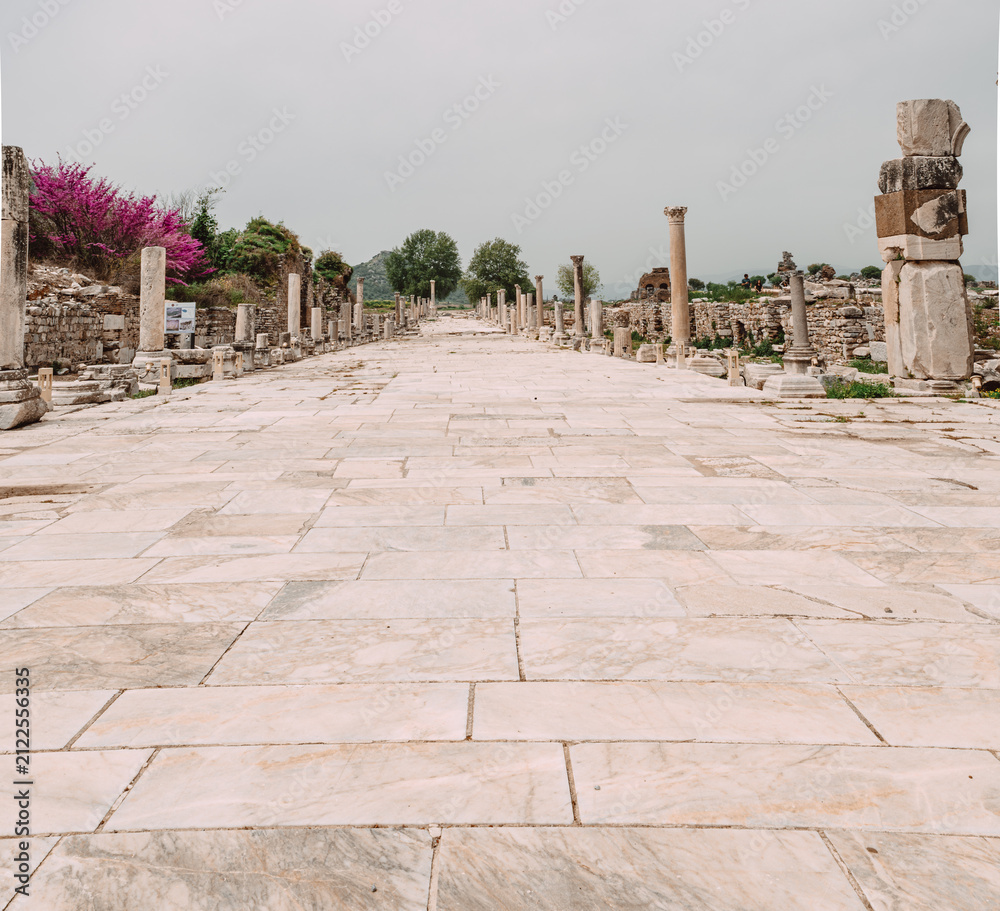
Ephesus looks inland today. In antiquity it was a harbour city, and everything about its power came from that. Access to the Aegean, and through it to the wider Mediterranean. Access to trade routes running east into western Anatolia. Without the harbour, there is no Ephesus.
Around 300 BC, Lysimachus — one of Alexander the Great’s successors — refounded Ephesus as a planned Hellenistic city. This wasn’t casual urban growth. The new city got a nine-kilometre fortification wall across the mountain slopes and a proper grid layout. It was a deliberate act of city-building.
The harbour became the lifeline. From at least the second century BC, the port was artificially reinforced. The commercial agora near the Celsus Library handled goods. Shops filled the commercial spaces. The theatre sat near the harbour zone. Physically, Ephesus was built around movement — ships, cargo, processions, merchants, pilgrims, officials.
But the harbour was always under pressure. Geoarchaeological research shows that the Kucuk Menderes delta continuously pushed the coastline westward. Sedimentation kept changing the shoreline and forcing new harbour locations farther out. The same delta that made the land fertile also slowly strangled the city’s access to the sea.
You can stand in the theatre and look down Harbour Street. It leads toward fields now. In the Roman period it led straight to the water, to the docks, to the ships. That view — marble street ending in dry farmland — is the whole story of Ephesus compressed into one image.
Why Was Roman Ephesus a Metropolis?
Roman Ephesus was the capital of the province of Asia. Not just a significant city — the capital. A major commercial hub with a harbour that served the broader eastern Mediterranean, sitting at the junction of sea routes and inland Anatolian roads.
But what strikes me every time I walk the site isn’t just the scale of it. It’s how deliberate the display was. Roman Ephesus was performative. Wealth wasn’t enough — it had to be visible. Curetes Street, the Celsus Library, the Temple of Hadrian, the terrace houses, the baths, the fountains, the gates, the great theatre — all of it was partly about status, patronage, and local elites competing to be remembered.
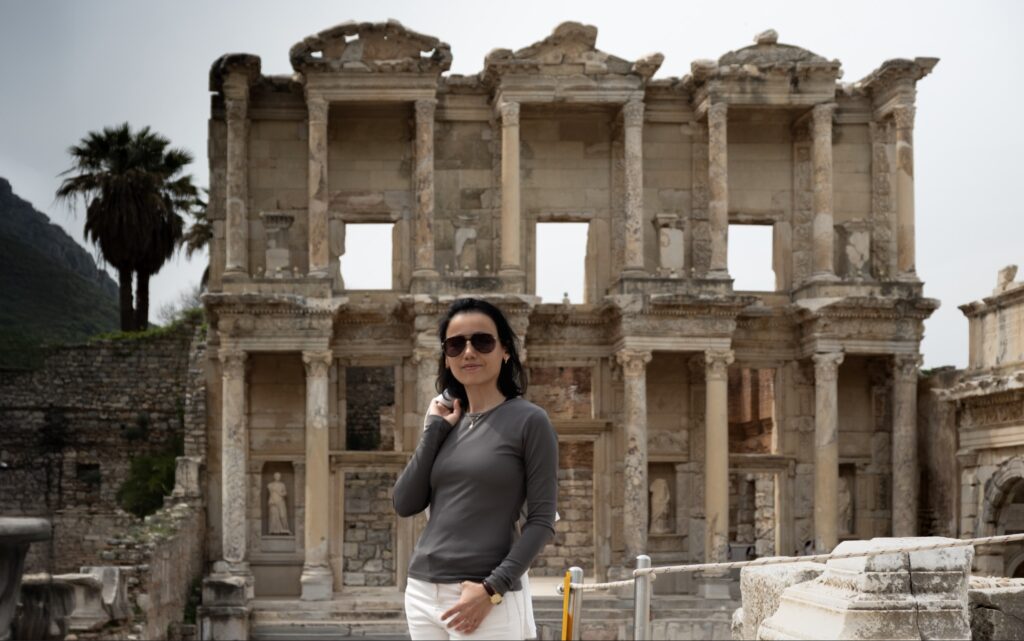
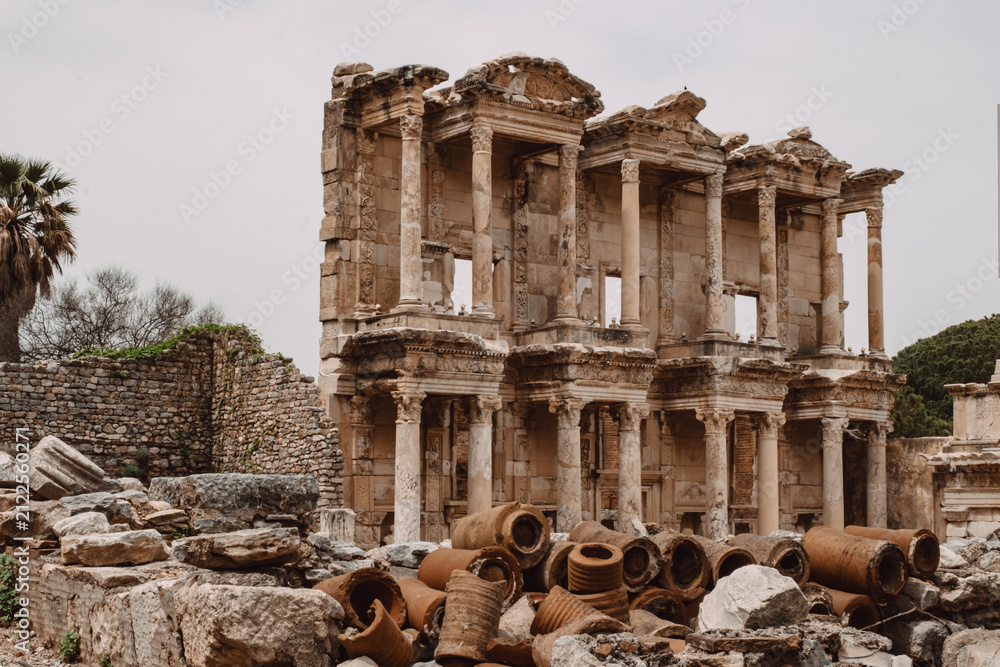
The Celsus Library is the best example of how that worked. Built in the early 2nd century AD, it held around 10,000 to 12,000 book rolls on two floors. That’s impressive. But the facade is the real statement. The burial chamber of Tiberius Iulius Celsus Polemaeanus — the man whose family funded the building — is placed directly behind it. Public library and private tomb in one structure. The family wanted you to connect their name with cultural achievement every time you walked past.
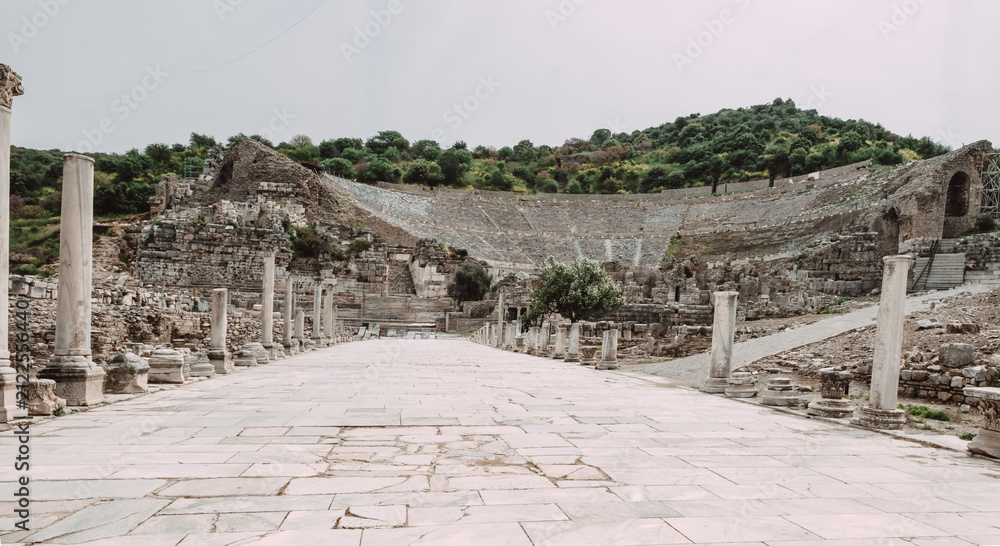
The theatre held around 24,000 people. It hosted performances and public events, but it’s also connected to the silversmiths’ protest against Paul described in Acts — a scene that tells you a lot about how economically important Artemis worship was, and how threatening a new religion could feel to people whose livelihood depended on the old one.
And Ephesus was cosmopolitan. The harbour and the imperial administration pulled people in from all over the Mediterranean. This wasn’t a provincial backwater. It was one of the major cities in the ancient world.
How Did Christianity Change Ephesus?
Christianity didn’t arrive into a vacuum. It came into a city already shaped by centuries of Artemis worship, Roman administration, active trade, and intense urban competition. That context matters a lot if you want to understand what actually happened here.
The theatre scene with Paul is often told as a religious story. I think it’s more useful to read it as an economic one. The silversmiths weren’t angry about theology. They were angry because a new religious movement was threatening the trade that depended on Artemis. Ephesus was big enough, connected enough, and symbolically important enough that this conflict became public and serious.
Later, Ephesus developed into one of the major centres of early Christianity in Asia Minor. And in late antiquity, it reinvented itself again — this time as a pilgrimage destination. The smaller late antique city organised itself around the former harbour area and filled with churches. People came for places connected with St John, the Seven Sleepers, St Luke, and St Mary.
The Church of Mary became particularly significant because of the Council of Ephesus in 431 AD. That council dealt with Christological debates around Nestorius, Cyril of Alexandria, and the title Theotokos — whether Mary should be called the Mother of God. It was one of the moments where Christian doctrine was formally argued and defined, and it happened here.
Byzantine Ephesus was a functioning city, not a slow ruin. Pilgrimage kept it economically alive — visitors needed accommodation, food, and services. The harbour was maintained as long as physically possible. If your visit stops mentally at the Roman ruins, you’re only seeing half the history. The Church of Mary, the Ayasuluk hill, the St John traditions, and the pilgrimage economy are not footnotes. They’re what kept Ephesus meaningful for centuries after the Roman heyday.
Why Did Ephesus Decline?
The short answer people always give is: the harbour silted up. And that’s true. But it’s too simple.
The harbour problem was genuinely long-term. Geoarchaeological studies show the Kucuk Menderes delta pushing the coastline westward over thousands of years — not as a sudden event, but as a slow, grinding process that required constant engineering effort and money to fight. When a city whose entire purpose was maritime trade loses convenient water access, the consequences are serious and eventually irreversible.
The Roman imperial crisis of the third century hit Ephesus hard. The prosperity you see in the first and 2nd century monuments didn’t insulate the city from economic disruption and natural disasters. There was a revival in late antiquity, but the city was smaller and increasingly defined by Christian institutions rather than harbour commerce.
After the 7th century, the urban footprint contracted further. Settlement concentrated around the Church of St Mary and was only sporadically maintained into the 14th century. A Byzantine community also grew around the destroyed Temple of Artemis site and gradually merged with the Turkish city of Ayasuluk.
By the 14th century, Ayasuluk had a new high point under the princes of Aydin. That’s worth keeping in mind. “Ephesus declined” doesn’t mean the region emptied out. Life, trade, and religious activity moved and reorganised. The centre of gravity shifted from the Roman city to Ayasuluk, and eventually to what is now Selcuk.
What Does Ephesus Mean Today?
Today Ephesus operates on three levels at once: an ancient city, an active scientific fieldwork site, and a managed tourism experience. These don’t always align comfortably.
The Austrian Archaeological Institute has worked here since 1895. OeAW describes it as one of Austria’s major scientific projects abroad. Current research includes excavation, building archaeology, conservation, finds analysis, scientific dating methods, student training, and public knowledge work. After more than 125 years of excavation, roughly 15 percent of the urban area has been investigated. The site isn’t a finished product. It’s still being read.
What visitors walk through is not a pristine ancient city. It’s partly a modern construct — shaped by excavation priorities, conservation decisions, reconstructions, tourism infrastructure, and choices about what to make visible and accessible. Some of what looks ancient has been significantly restored. Some areas of the city are still completely buried. Knowing that doesn’t diminish Ephesus. It makes it more honest, if you explain it properly.
A reconstructed facade, a protected terrace house, a cleared marble street, and an unexcavated district all tell different kinds of truth about the place. The problem isn’t the reconstruction or the management. The problem is when visitors assume that the main tourist route shows them the whole city. It shows them a carefully chosen selection.
Most standard tours cover the Herakles Gate, the Temple of Hadrian, the latrine, the Celsus Library, the terrace houses, the theatre, and Marble Street in around 75 minutes. That’s a practical slot for cruise schedules. It’s not enough time to understand what you’re actually looking at.
Ephesus today is not only a ruin. It’s a place where the ancient Mediterranean becomes visible — and where modern decisions about conservation, restoration, tourism, and research constantly shape what that visibility means.
How Should Travelers Visit Ephesus?
For a visit that actually makes sense of the place, give it more time than the standard highlight route.
Most visitors see a small selection of monuments and not much else. A genuinely useful visit needs at least three layers: the main Roman city, the Terrace Houses when they’re accessible, and the wider Selcuk-Ayasuluk-Artemision landscape around the site.
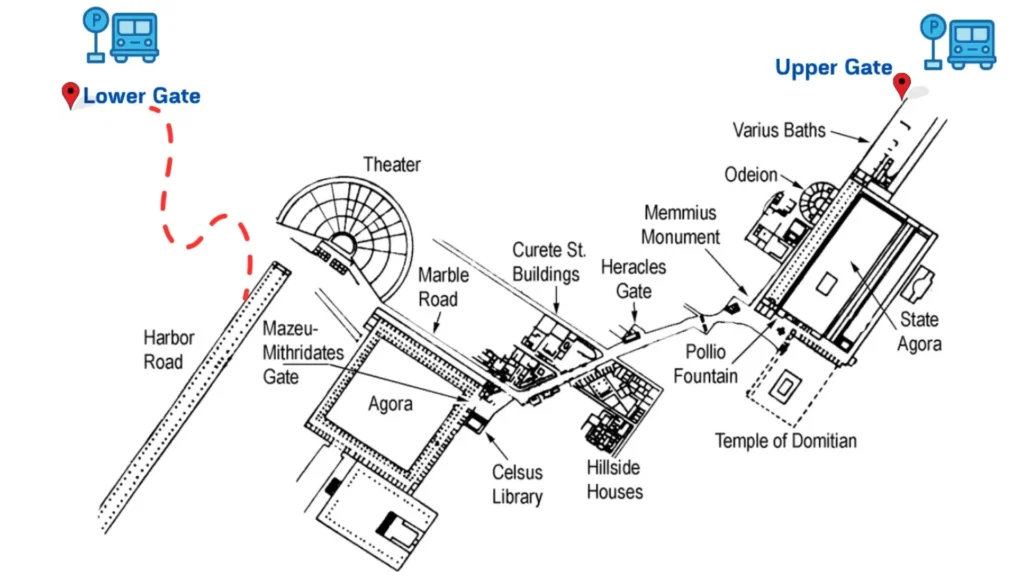
If your route allows, start at the upper gate and walk downhill.
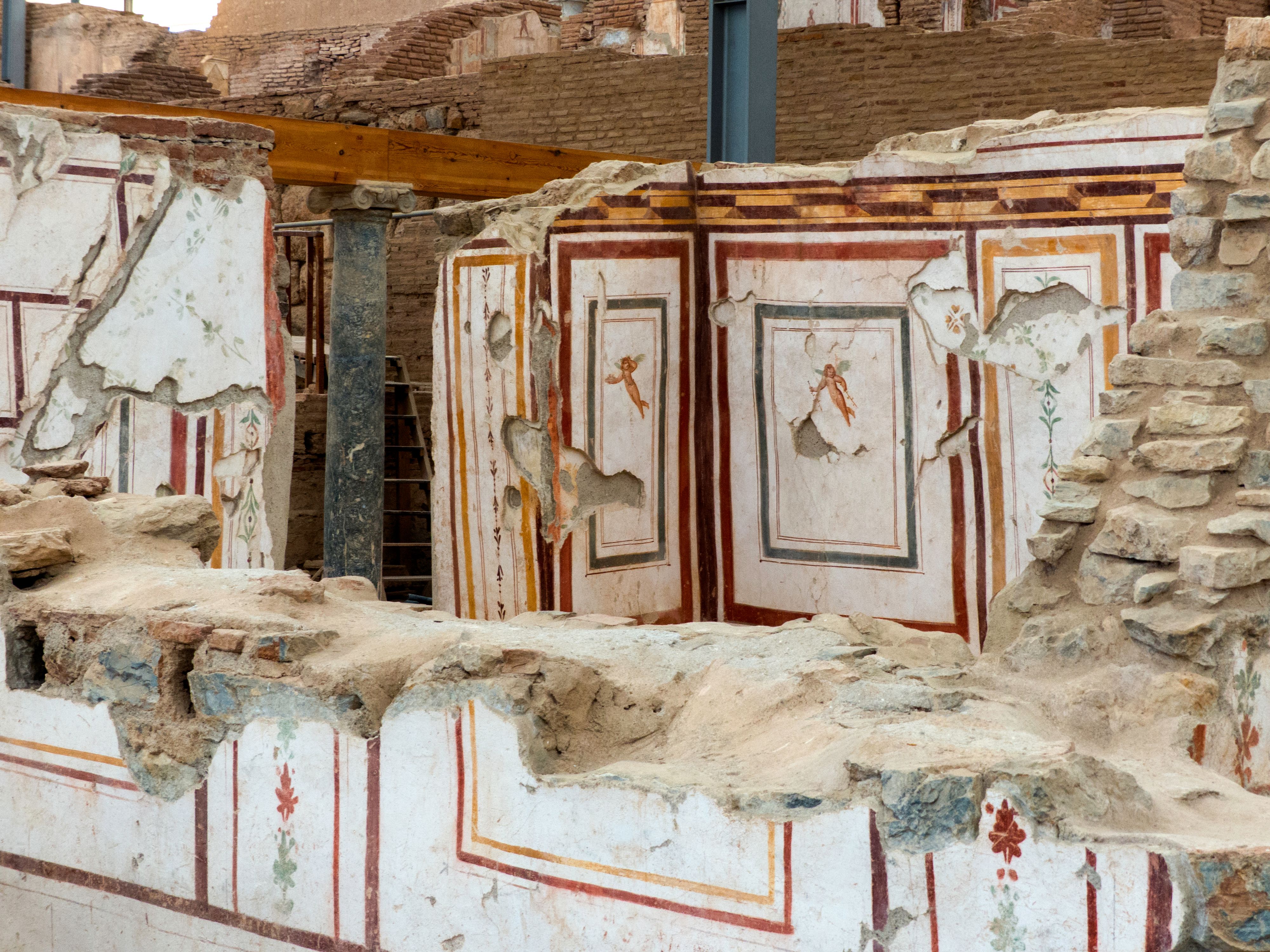
The Terrace Houses are worth the extra entrance fee. Relatively small share of total visitors actually goes in, mostly because of that fee. Historically they’re one of the most revealing parts of the whole site — private wealth, domestic decoration, social hierarchy, real daily life. Fee amounts change, so I won’t give a number here, but don’t skip them if you’re serious about understanding Roman Ephesus.
Most people visiting independently find that navigating the site, the Terrace Houses, and the wider Selcuk area in a single day is harder than it looks on a map. A licensed local guide or a small-group tour that includes the Terrace Houses cuts through that problem directly — you’re not spending energy on logistics, you’re spending it on understanding what you’re looking at.
Don’t plan Ephesus like a regular museum where you can arrive an hour before closing and catch the highlights. The site is large, the ticket offices close before the official exit time, and restoration work can change your walking pattern without warning.
How Much Time Do You Need at Ephesus?
For the main archaeological site only: at least 2 hours. That covers the main streets, the Celsus Library, the theatre, and the key monuments without too much rushing. But only just.
For a proper visit: 3 hours. That gives you time to go into the Terrace Houses, pause for explanations, take photos without being in everyone’s way, and sit down briefly in the shade when you find it.
For a full day: plan 5 to 7 hours including transport. A good route can cover Ephesus, the Terrace Houses, the Temple of Artemis, the Ephesus Museum in Selcuk, and the House of the Virgin Mary. Sirince village can be added, but only if the group is comfortable with a full schedule and the weather cooperates.
Families with young children: keep it shorter in summer. The ground is uneven, shade is limited, and children lose interest fast once the heat builds. A focused route — library, terrace houses, theatre — is better than trying to explain every ruin and watching everyone suffer by midday.
If you have mobility concerns: think carefully about the route before you arrive. Ephesus has real slopes, uneven marble surfaces, and very few flat sections. The Lower Gate to Celsus Library direction is the easier choice, but it’s still a working archaeological site. Plan accordingly and don’t be surprised by the terrain.
Can I walk to Ephesus?
Don’t walk from Selcuk to Ephesus in summer. The distance isn’t huge, but you need your legs for the site itself.
Is there all inclusive package to visit Ephesus?
If you want transport, guiding, and route planning sorted in one go, a guided day tour from Izmir is worth it — particularly if you also want the Terrace Houses, the Temple of Artemis, the Ephesus Museum in Selcuk. Book Here!
When Is the Best Time to Visit Ephesus?
Early morning. That’s the answer, whatever season you’re visiting in.
In spring and autumn, early morning gives you soft light and comfortable temperatures. In summer, it’s not just more pleasant — it’s genuinely smarter. The marble reflects heat. Shade is scarce across most of the route. Arrive at 10am in July and you will feel every minute of it.
April, May, late September, and October are the most comfortable months for walking the site. July and August are very hot, especially from late morning onward. If you have no choice but to visit in summer, bring more water than you think you need, a decent hat, sunglasses, and shoes with grip — the marble is polished and can be slippery even when dry.
Winter is underrated. The site is quiet, the light on the stones is often beautiful, especially after rain. The one problem is that wet marble is genuinely slippery. Take your time on Curetes Street and around the theatre steps.
Cruise ship schedules matter more than most people realise. When multiple ships dock at Kusadasi on the same morning, Ephesus can feel genuinely crowded from around 10am onward. If you’re staying overnight in Izmir, Selcuk, or Kusadasi, you have a real advantage. Get in early, or plan to arrive in the afternoon once the shore excursion groups start heading back to the port.
If you want a clear photo of the Celsus Library facade without a crowd in front of it, don’t spend too long at the upper ruins on the way down. Walk directly to the lower city first. Get the library. Then slow down and take in the details on the way back up or around.
Where to stay in Ephesus?
Best Hotels near Ephesus
- Akanthus Hotel Ephesus
- Ayasoluk Butik Otel
- Celsus Butik Otel
- Livia Garden Hotel
- In Ephesus Otel and Art Galery
Best hotels in Kusadasi
- Villa Ephesus Hotel
- Unique Life Style Hotel
- Ilayda Avantgarde Hotel
- Elite World Kusadasi (My Personal preference N.1)
- Charisma De Luxe Hotel (My Personal preference N.2)
Best hotels in Izmir centre
- Izmir Marriott Hotel
- Key Hotel
- Renaissance Izmir Hotel
- Swissotel Buyuk Efes Izmir
- Park Inn by Radisson Izmir
How To Go To Ephesus?
By car from central Izmir, the drive is roughly 1 hour. If you’re driving, think about gate strategy before you park. A lot of visitors park near the Lower Gate, and enter and exit the site from lower gate. That’s the most comfortable approach. Hire A Car! Book now!
In case of traveling by car, it’s important to consider the location for parking and reaching the route of the visitors. Using public transport is all good but a bit tiring. Organized excursions simplifies the logistics, especially when a tourist doesn’t use a rental car.


There’s an airport in Izmir if you consider a trip from another city you can also check the domestic airfare prices and transfer services here. It takes around 1h 30 mins flight to land from istanbul, Cappadocia or Antalya.
How to Go to Ephesus From Izmir City?
The most practical option on public transport is the train to Selcuk, then a short taxi or minibus to the site. The main regional rail station in Izmir is Basmane. Depending on the service, the Izmir to Selcuk journey runs roughly 1.5 hours.
The Izban suburban rail also connects various Izmir districts through the airport corridor toward the southern line for Selcuk, but transfer points and service patterns do change. Always check current Izban and TCDD timetables before you travel, especially if you’re planning an early start.
From Selcuk station, Ephesus is close. A taxi to the Upper Gate is the easiest choice if you want the downhill walking route through the site. Local minibuses from Selcuk run toward the Ephesus area too, though they tend to serve the lower entrance side, and frequency and stops vary by season.
How to Go to Ephesus From Kusadasi?
Kusadasi is the easiest base for Ephesus. The two are roughly 20 km apart, and the drive takes about 20 to 30 minutes depending on traffic and port activity.
For cruise passengers: use a private transfer or a guided shore excursion. Not because the logistics are complicated, but because cruise timing is strict. You need to account for the port exit, the transfer, ticket queues, the walking inside the site, and getting back to the ship with time to spare. Cutting it close at Ephesus is a bad idea — the site is large and the clock moves faster than people expect.
For hotel guests, taxis and private transfers are simple. Agree on the price, the waiting arrangement, and the pickup point before you leave. The best setup is usually drop-off at the Upper Gate and pickup at the Lower Gate — it avoids unnecessary uphill walking and gives you the natural downhill flow through the site.
Budget options exist. Local minibuses run between Kusadasi, Selcuk, and the Ephesus area, with more frequency in the warm season. But stops and times can change, so ask locally the day before — especially if you’re a cruise passenger relying on public transport to get back to the ship.
A guided tour from Kusadasi covering Ephesus, the Terrace Houses, and nearby Selcuk stops is the most efficient way to use a half-day or full day here.
Activities Around Ephesus
FAQs About Ephesus
Can you walk to Ephesus from Selcuk?
Well, yes but I don’t recommended. it isn’t a pleasant walk, distance is considered a bit far and whole rode is exposed to sun, no pedestrian provided in lots parts.
What else to visit around Ephesus?
Ephesus ancient city site, Selcuk archeology Museum, Mother Mary’s House and Church, St Jean Basilica, Sirince Town,